

The Proverbial Elephant: A Critical Lesson in Abstraction
The ancient parable of The Blind Men and the Elephant teaches us about the power of abstraction

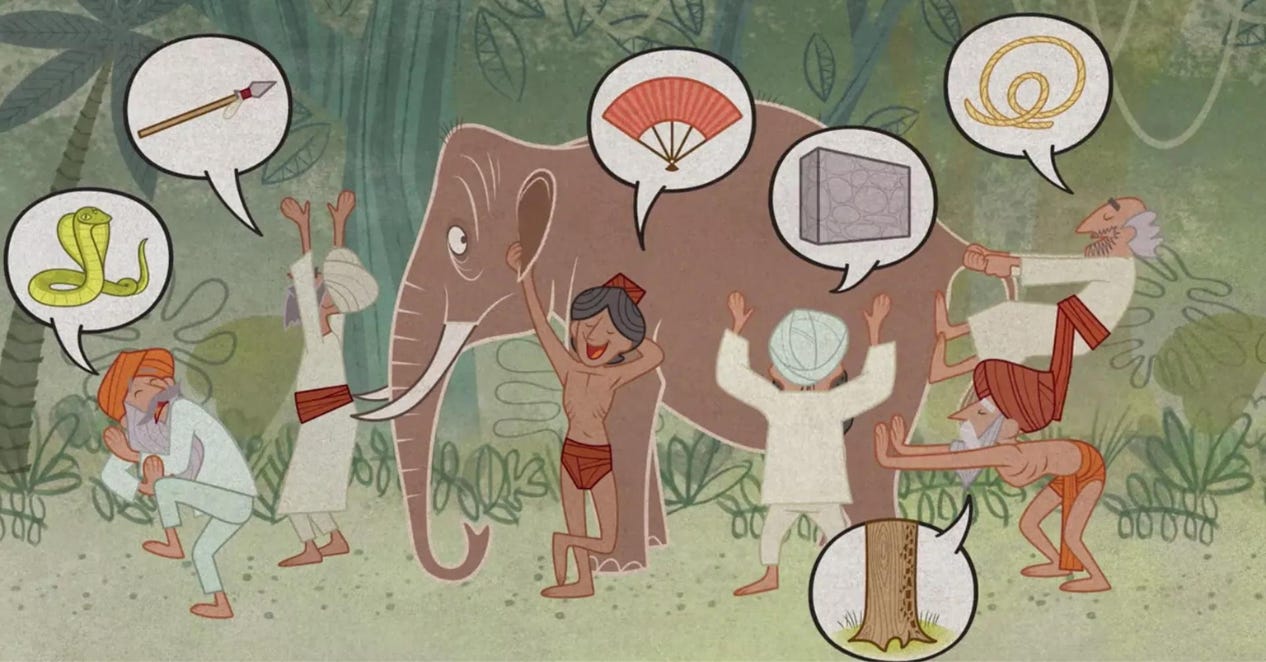
The opening slide of the main presentation for Project: ISITAS depicts the ancient fable of ‘The Blind Men and the Elephant’. I’m sure you’re familiar with it, so I’ll spare you the recitation of the story. Suffice it to say it has to do with being too quick to make judgements about things.
I felt the need to invoke that story because, like the proverbial elephant, ISITAS consists of several distinctive parts or aspects that all need to be understood individually before we can see how they all fit together in a unified whole. And I have experienced the dynamic of the blind men many times, as people race to fit what I’m telling them into their frame of reference as quickly as possible.
I have used the parable of the blind men and the elephant many times, as I’m sure many of the readers have as well, because it is such an apt, profound experience. We’ve all experienced people leaping to judgement based on preliminary and partial information. But it wasn’t until today that I connected the dots between this parable and one of the key concepts of ISITism: Abstraction.
Abstraction is basically the process of distilling things down to their essence — eliminating extraneous details. A planet is a type of sphere, so a sphere is an abstraction of a planet. A sphere abstracts to a circle. And a circle abstracts to a point.
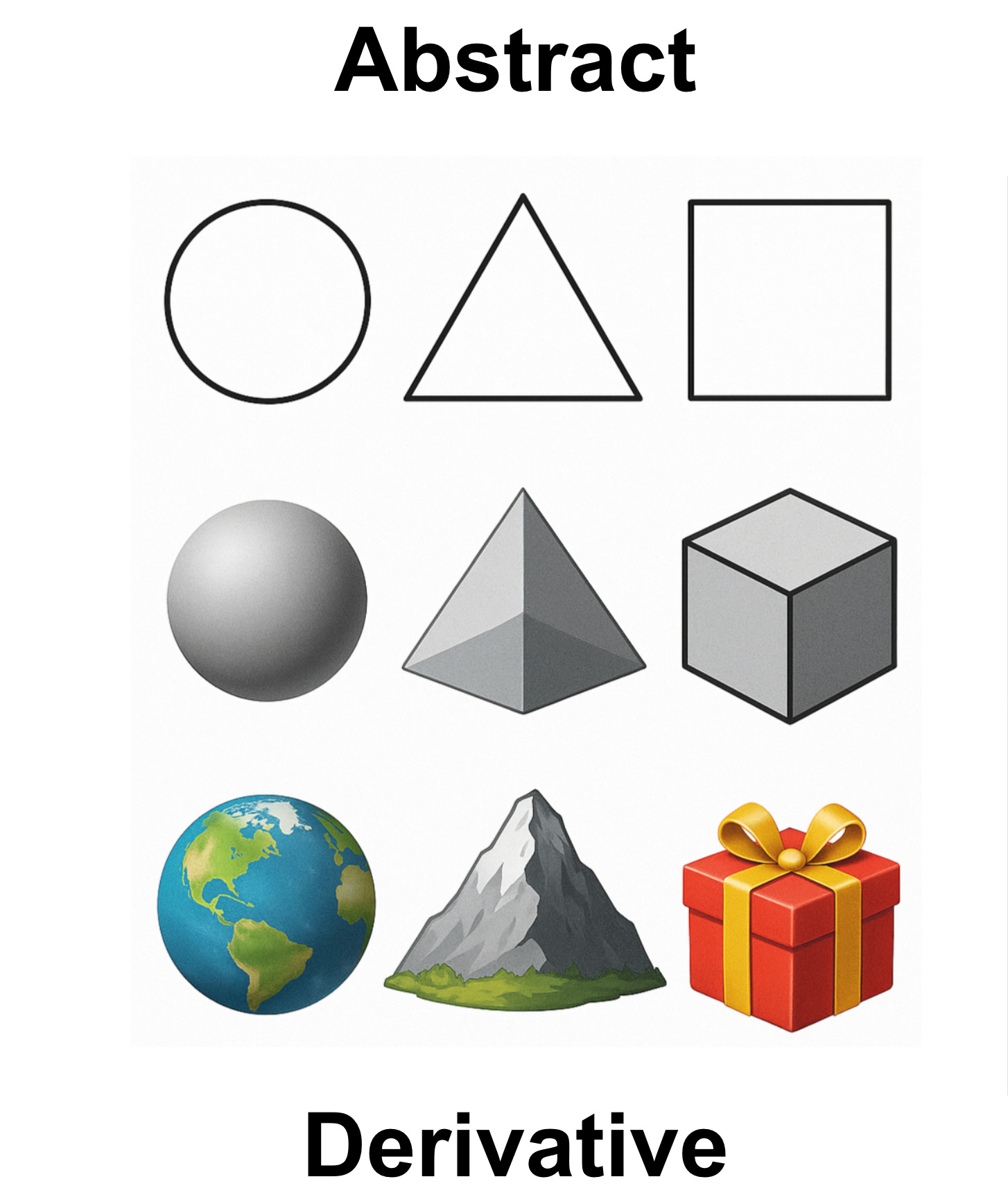
The capacity for abstract thought is a fundamental human ability that we all use every day, all day long. But we are generally unaware that we are doing it at all, let alone how we are doing it. Fully comprehending the significance of abstraction and increasing your awareness of how to use this concept, is the key to unlocking the full potential of any situation.
The parable of the blind men and the elephant is a lesson in abstraction.
Each one of the blind men were looking for clues to determine exactly what this thing they were talking about was. They identified the traits of the objects within their frames of reference, and extrapolated those traits to the rest of the objects associated with it. It’s basically the same as saying ‘All black people are…’, ‘All Christians are…’, ‘all Democrats are…’, etc.
Stereotyping is one such distorted form of abstraction, where people assign a standard set of attributes to an entire organization, community, nationality, race, type, orientation, or perspective. But this is just the beginning. The misunderstanding and misuse of the concept of abstraction is behind a great deal of the conflict we see in our world today.
Once you recognize this issue, you can see it everywhere — people arguing endlessly, not because they fundamentally disagree, but because they are looking at the situation from different levels of abstraction. And because they don’t even realize that the discrepancy is in terms of their abstraction ‘zoom level’, they keep going around and around and never getting to the bottom of it.
Imagine a day when people have deeply involved conversations, fully aware of the concepts of abstraction and derivation, when they can zoom in and out of perspectives from wide-angle abstractions to deep derivative details without getting confused or angry, and give each other a more complete view of their reality.
Imagine how many more problems we could solve by people addressing them collaboratively with a clear understanding of how to exchange ideas effectively.
The way to get there is understanding the significance of the concept of abstraction.
And now you know why ‘The Blind Men and the Elephant’ is such an enduring parable. It teaches us about the troublesome issue of misaligned abstraction, and by extension, the incredible power of understanding the difference between derivation and abstraction.
Learn more at https://isitas.org